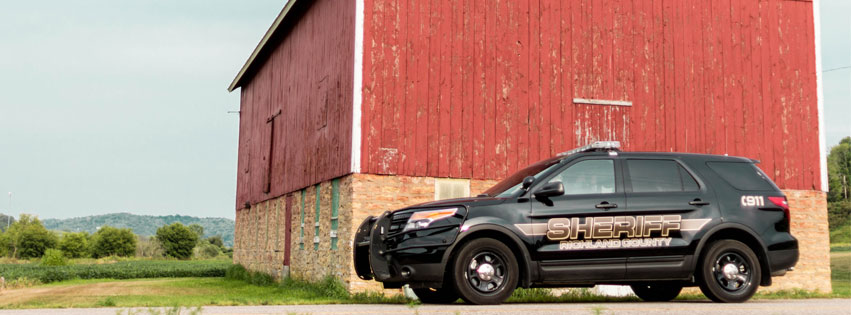
The village is using the increase in state funding to hire new public safety staff.

By Peter Cameron, The BADGER PROJECT
More money is always nice. For Mount Horeb, it could mean a safer community.
The village, like every municipality in the state, got a big increase this year in one type of funding from the state. The extra cash will help improve and maintain emergency services here, the police and fire chiefs say.
For the past two decades, the village of Mount Horeb received about $150,000 annually from the state from a program called shared revenue. In 2024, that total will more than double to nearly $360,000.
“It’s the biggest increase in state support for local governments in a generation,” said Jerry Deschane, executive director of the League of Wisconsin Municipalities, an organization which lobbies on behalf of local governments. “It’s that significant.”
The increase in state funds is coming just in time.
Along with funds from the state, municipalities fund themselves with their local property taxes. In 2011, the Republican-controlled state legislature removed the ability for local governments to raise property taxes on existing buildings without residents first voting their approval. With state funding flat for years, that meant municipalities’ only sure way to increase their tax revenues was through new construction. If a community didn’t have enough new construction to keep up with its rising costs, it could fall behind.
Since Mount Horeb is landlocked by other municipalties, the village doesn’t have much space for new construction to boost its tax revenues, said Nicholas Owen, the village’s administrator.
And the village of Mount Horeb has grown more than 10% since the 2010 Census, from about 7,000 to nearly 7,900 now. More people require more services.
Recent inflation lifting costs added to the existing problem.
Without a change, Mount Horeb would not have been able to keep up with its rising costs, Owen said. He noted the expanding prices of buying and maintaining vehicles as well as staying competitive on the wages of village workers.
“Local governments only revenue source wasn’t able to keep up with inflation for years, and that just started to reach a critical point,” Deschane said. “And the legislature heard them.”
This year, the Republican-controlled state legislature and Gov. Tony Evers, a Democrat, used the state’s historic $7-billion surplus to increase those payments to local governments.
Moving forward, those payments will now be tied to the state’s sales tax, so as long as that pot of money continues to grow, local governments will see their share increase.
Though the increase was large in historical terms, it was modest in budgetary ones, Deschane noted, so the new spending in Mount Horeb and across the state will cover “meat and potatoes” services, like public safety, plowing, potholes, etc.
“Not sexy,” said Deschane, “but critical.”
Additional police officer coming to Mount Horeb covered by increase in state funding
Mount Horeb will see an additional police officer patrolling its streets thanks to the boost in revenue from the state.
The new officer will benefit the village in a variety of ways, Mount Horeb Police Chief Doug Vierck said in an email.
“More staff means we can be more efficient in our duties, cover more area (especially important as the Village grows), cross train to allow better responses to incidents,” he said. “We also use the extra staff to send more officers to more trainings and bring better services back to the community — car seat installation inspection, community engagement training, impaired driving and traffic safety training to reduce traffic crashes in injuries, etc.
The additional officer will also help alleviate stress and burnout for the police staff by reducing overtime and longer shifts, Vierck said. The village may also see savings from reduced overtime.

The new officer will start at an annual wage of about $51,000, Vierck said. With benefits, the additional position will cost the village about $75,000 per year.
The village actually hired two officers recently, as it had also needed to fill another position as well. Both are attending the police academy and will start field training in May, Vierck said.
One of the new officers, Kyle Dix, spent ten years in the Marines before entering law enforcement. He joined the Mount Horeb Police Department from a correctional facility where he worked as a guard.
The other, Braden Folbrecht, grew up in southwestern Wisconsin and played football for Ripon College. He worked for an insurance agency before starting his career in law enforcement.
With the additions, the Mount Horeb Police Departments will have 16 total officers — the chief, a lieutenant, two sergeants, one detective, one school resource officer, and 10 patrol officers, Vierck said.
With volunteering down, Mount Horeb Fire and EMS aim for ‘faster response times’ with new hires thanks to state revenue increase
Volunteering has decreased considerably, so the village’s emergency response needs to fill shifts with another type of worker.
In the past five years, the Mount Horeb Area Joint Fire Department and Emergency Medical Service has seen a decline of more than 40% in hours picked up by volunteers, Chief Jenny Minter noted in recent phone interview.
So the news the department would be able to increase its budget nearly 25%, from about $1.2 millon to about $1.5 million, thanks mainly to the increase in funds from the state, called the shared revenue program, was a welcome one.

Much of that increase went to three new hires, Minter said.
The department, which is also responsible for covering Village of Blue Mounds, Town of Blue Mounds, Town of Springdale, Town of Vermont, Town of Primrose, Town of Perry and Town of Cross Plains, will add the following:
- A full-time deputy chief to help manage day-to-day operations – $85,000 starting salary
- One firefighter/advanced EMT to cover shifts left open from declining volunteers – $52,000 starting salary
- A part-time administrative position to help with clerical work and to increase the hours a person is available to the public at the firehouse, especially when the chief and assistant chief goes out on a call – $20,000 starting salary
Each municipality covered by the fire department had to agree to increase its funding to the department, a decision likely made easier by the fact that they all got bumps in their annual shared revenue from the state.
Mount Horeb Fire & EMS will grow to 70 members, including the chief and 62 volunteers.
Brain tissue starts to die after six minutes without oxygen, Minter noted, so the department’s ambulance needs to reach emergencies as soon as possible.
“The goal is to see faster response times,” she said.
This journalism was funded by a grant from the Mount Horeb Community Foundation.
The Badger Project is a nonpartisan, citizen-supported journalism nonprofit in Wisconsin.
Categories: Politics