Consistent with recent elections, Democrats are winning direct fundraising in the Wisconsin Supreme Court race. But Republicans are well ahead in independent spending, thanks mainly to Elon Musk.

By Peter Cameron, THE BADGER PROJECT
In what has become the gameplan of both state parties in recent elections, Wisconsin Democrats are winning the direct donation game in this year’s race for state Supreme Court. But Republicans are beating their counterparts in independent spending, using super PACs, organizations that sit apart from the parties and their candidates, which can raise and spend political cash without limit. Mostly with the help of one, high-profile donor.
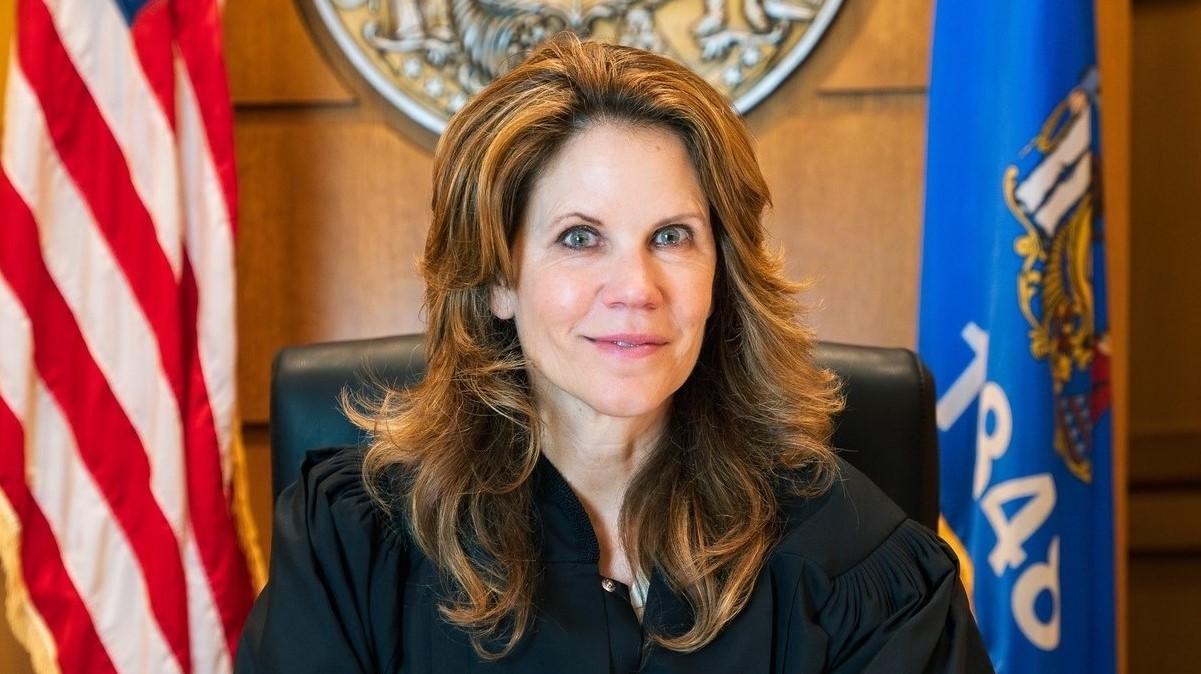
Susan Crawford, a Dane County circuit court judge and the political left’s candidate for Wisconsin Supreme Court, raised more than $5 million through mid-February, according to the most recent mandatory reports she has filed with the state.
Her opponent Brad Schimel, a Waukesha County circuit court judge and the political right’s candidate, raised about $3 million through mid-February.
The most an individual can donate to a candidate for Wisconsin Supreme Court is $20,000, per state law.
Both candidates will almost certainly continue to raise and spend much more in the final weeks before the April 1 election.
The race is technically nonpartisan, though the two main parties traditionally support opposing candidates.
Another part of campaign finance is spending independent of the candidates and their parties. Through late February, independent political groups like Super PACs have spent more than $3 million to support Schimel and attack Crawford, according to reports filed with the state.
And most of that cash — about $2.5 million — has come from Elon Musk’s America PAC, which he is using to try to elect Schimel. That outcome would flip the court’s majority back to the right. Specifically, the America PAC has used that money to pay for door-knocking operations, text messaging and printing and postage for mailers, according to reports with the state.
Musk may have a vested interest in who sits on the Wisconsin Supreme Court. A lawsuit by his electric car company Tesla that argues the state is blocking it from selling its cars directly to consumers could appear before the state’s highest court eventually.
Only one super PAC, the Wisconsin Conservation Voters Independent Expenditure Committee, has reported spending to support Crawford, at about $200,000. None have reported opposing Schimel yet.
It’s a safe bet that many more millions will also be spent by super PACs in the final weeks of the campaign by both sides.

All these early campaign finance returns follow the strategies in recent years of both parties, as major left-leaning donors have favored using the unlimited fundraising and spending capabilities of their party to disperse huge sums to candidates, while more right-wing donors have preferred to give their cash to super PACs. One theory for those choices is that left-leaning donors have more faith in their party and institutions in general compared to right-leaning donors.
Though both parties do it, Democrats have been more successful recently in getting big donors from outside Wisconsin to donate to candidates and the state party.
For example, billionaire left-wing donors George Soros and Illinois Gov. J.B. Pritzker have given $1 million and $500,000, respectively, to the Wisconsin Democratic Party earlier this year.
Billionaire right-wing donors Diane Hendricks, chairwoman of ABC Building Supply, and Richard Uihlein, co-founder of the packing supplies company ULINE, gave the state Republican Party $1 million and $650,000, respectively, earlier this year. Uihlein frequently gives even more to his super PACs to elect right-wing candidates.
Funds given directly to candidates are, in theory, more effective, experts say, because campaigns and parties can use them however, and wherever, they want. For example, if a political campaign sees support slipping in the western part of the state, it could buy last-minute TV ads there to help shore up its standing.
Independent spending organizations like super PACs are banned by law from communicating and coordinating with campaigns and parties, so again, in theory, that could make their spending and advertising less effective, as they may have less idea where and how to use it.
The loophole in state law allowing unlimited amounts of cash to flow through political parties was opened by court cases and inaction by the GOP majority in the Wisconsin State Legislature.
It could be closed, but so far, Republicans have ignored attempts by Democrats in the minority to do so. Should they ever retake the state Legislature, it remains to be seen if Democrats will want to close a loophole that is now working so well for them.
And regarding the ability of super PACs to raise unlimited amounts, the state of Maine has passed a law that would cap donations to those independent spending groups at $5,000 per person. That would prevent a billionaire like Musk from being able to spend so much through super PACs, and thus could have major impact in a swing state like Wisconsin. But the law is tied up in court, and it is questionable whether the U.S. Supreme Court will allow it to stand, experts say.
The Badger Project is a nonpartisan, citizen-supported journalism nonprofit in Wisconsin.
Categories: Investigations, Politics