

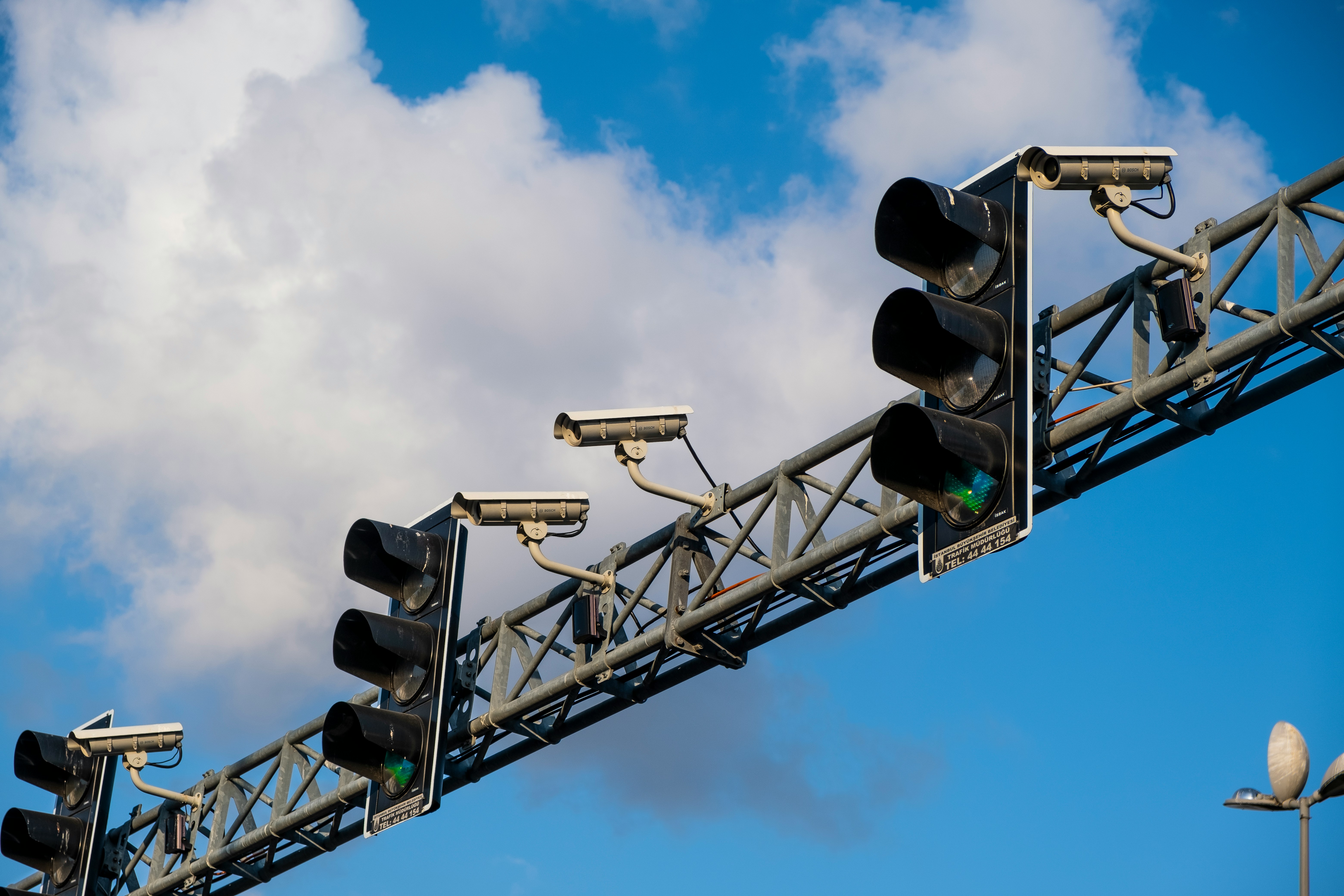
A bipartisan bill in the Wisconsin State Legislature would let the city install traffic cameras to ticket speeders and red light runners. Milwaukee’s top brass has begged lawmakers for the exception.

By Annie Pulley, THE BADGER PROJECT
Last year, 74 people died and about 5,500 were injured in car crashes in Milwaukee, according to the city’s Traffic Violence Dashboard. That’s a 45% increase in fatalities compared to 2014.
A 2024 report from the Wisconsin Policy Forum found that while traffic deaths declined by 36% in the whole of Wisconsin from 2002 to 2022, the same statistic rose in Milwaukee County by about 114%. Between 2012 to 2022, crash deaths in Milwaukee increased by about 100%, while the state’s next 19 largest cities combined saw only a 46% increase in the same period, according to the report.
A bipartisan group of state lawmakers is attempting to address the problem with a bill that would give the city authority to install automated camera systems that can detect and ticket drivers who speed or run red lights. Speeders driving less than 15 miles above the posted limit would not be ticketed. Right now, these systems are banned across the whole state.

This bill, unlike previous attempts, made it to a public hearing, drawing legislators from the state Senate Committee on Transportation and Local Government to Milwaukee on Oct. 7.
The mayor, police chief, several alders and multiple members of the public spoke in support of the bill during the hearing that stretched past three hours.
“Traffic violence is one of the most pressing public safety challenges in our city,” Milwaukee Police Chief Jeffrey Norman said during the hearing. “Every officer knows the heartbreak of responding to a fatal or severe crash scene.”

Milwaukee County Executive David Crowley, a candidate in the Democratic primary for governor, has advocated for the change as well.
“Our streets should be safe for all,” Crowley wrote in the introduction of a December 2024 county traffic safety plan. “Our streets should be the fundamental building blocks of our communities, not another barrier to wellbeing and prosperity.”
The bill allows first-class cities in the state to deploy the traffic cameras. Milwaukee is the only city in the state that qualifies.
Hundreds of cities across 22 states use red light cameras, including those in Illinois and Iowa, according to a 2024 report from the National Conference of State Legislatures. And speed cameras are up and running in about 310 cities across 25 states, including Illinois, Indiana and Iowa.
Madison has also set its sights on automated traffic enforcement as part of a plan developed by its Vision Zero team, the city’s group dedicated to eliminating traffic deaths. The Vision Zero framework, which is also driving the effort in Milwaukee, is active in many major U.S. cities.
If the camera system were implemented in Milwaukee, as many as five cameras could be placed in each of the city’s districts for a maximum of 75. Proponents say they would target roadways most affected by reckless driving.
Consider a donation to help us shine a light on the powerful in Wisconsin.
DONATEThe bill met some resistance at the hearing. State Sen. Van Wanggaard (R-Racine), a former police officer, called the bill a “cash cow.” He said he’d rather see cops out on the street enforcing traffic laws. The cameras penalize the “little guy,” he argued, while the truly dangerous drivers aren’t deterred. Staffing the police department should be the priority, he said.

Norman responded that while staffing is a priority, the traffic cameras would be a helpful tool to ease the burden on a department that’s already under strain.
State Rep. Christine Sinicki (D-Milwaukee) originally signed onto the bill but withdrew her name.
“There were some concerns about unintended impacts of the law, like profiling, and people being saddled with lots of traffic tickets they can’t pay,” her office explained in an email. “She may still vote for it – we’ll see what shape it’s in.”
State Sen. Chris Larson (D-Milwaukee) echoed the same concern.
“To single out the state’s largest city is problematic, particularly as it would likely only worsen existing racial disparities in enforcement of traffic laws,” Larson’s office wrote in an email.
Larson’s office also expressed concern that the ticket would be issued to the vehicle owner, who may not have been driving it.
Jessica Weinberg, the city’s Vision Zero policy director, said the bill provides for a mandatory 30-day public information campaign before rolling out the cameras. For the first 90 days of the program, the tickets issued would only be warnings, she said.
“We want to change behavior,” said Weinberg. “We aren’t trying to maximize revenue.”
As of the public hearing, 15 Democrats and nine Republicans across the state Assembly and Senate are named on the bill.
The Badger Project is a nonpartisan, citizen-supported journalism nonprofit in Wisconsin.
FREE TO READ. EXPENSIVE TO PRODUCE.
Creating our hard-hitting news takes a lot of time and money.
A story like this needs at least 8 hours to research, write and edit.
Please consider financially supporting The Badger Project to help us do more reporting in the future.


Leave a Reply