

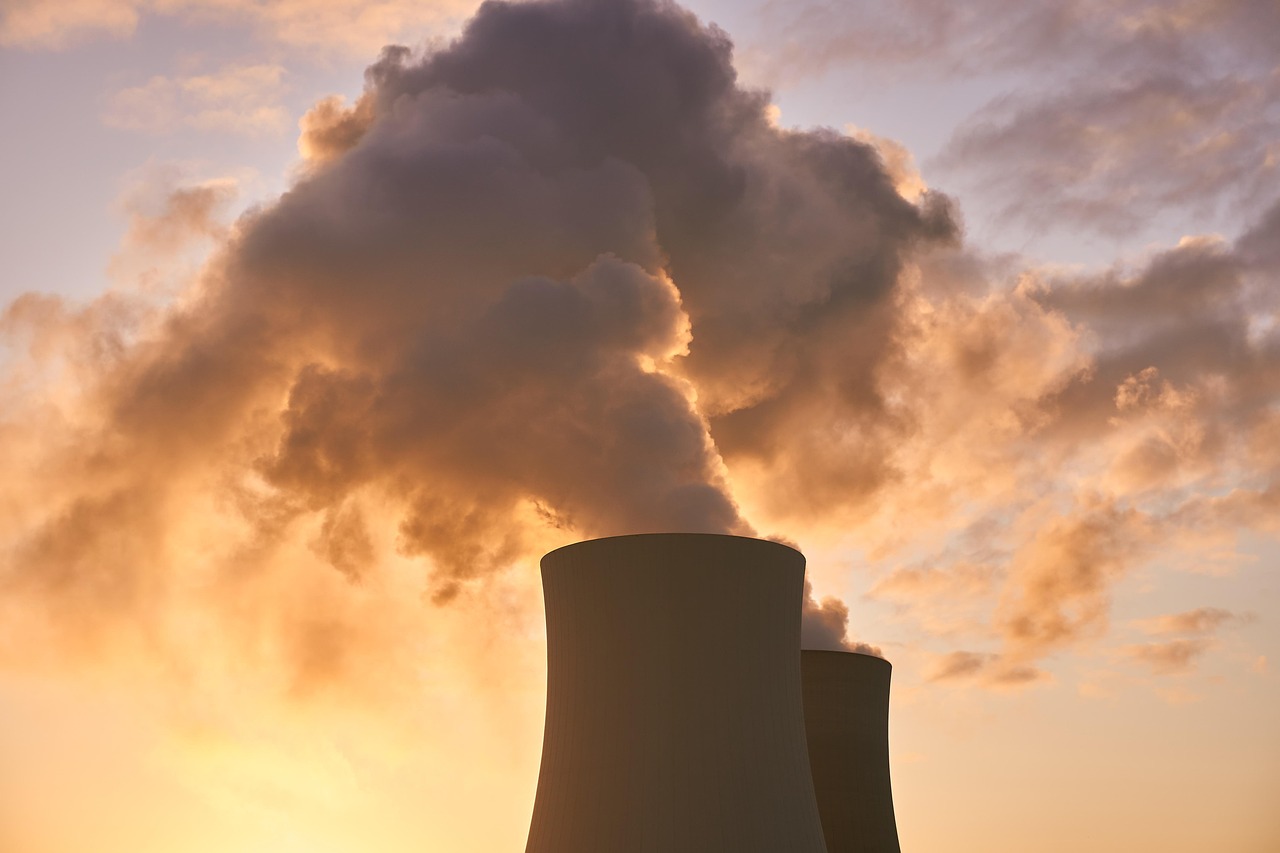
A bill in the state Legislature aims to bolster nuclear power in Wisconsin. State Rep. Shae Sortwell, a Republican from Two Rivers, wants the state to become an energy “powerhouse.”
By Annie Pulley, THE BADGER PROJECT
A bipartisan supermajority in the state Legislature agrees: nuclear power should help Wisconsin keep the lights on.
“I’m hopeful that we will be the leader in the country for nuclear power,” state Rep. Shae Sortwell (R-Two Rivers) declared in a podcast interview.
A bill he and a handful of other Republicans authored seeks to tackle what Sortwell calls the “Achilles heel” of the nuclear power industry: the upfront costs. The 4,000-word bill passed the state Assembly by an 86-11 vote in January and provides strong support to Wisconsin’s burgeoning nuclear power industry. Now it’s sitting in a committee in the state Senate.
The city of Two Rivers is in Sortwell’s district and is home to Wisconsin’s only active nuclear power plant.
The bill would institute tax credits for nuclear energy companies that last up to 20 years and essentially work by lowering their tax burdens. The tax bill would be reduced proportionally to how much energy the nuclear power plant produces.
The production tax credit is “one of the biggest things you could do” to bring nuclear energy operations to Wisconsin, said Paul Wilson, the chair of the nuclear engineering department at UW-Madison and an energy policy researcher.

The policy incentivizes companies to build nuclear power plants by essentially making the endeavor more profitable, Wilson said. Nuclear power plants require years of research, design and permitting work before construction can even begin.
For instance, two nuclear power reactors near Waynesboro, Georgia, began commercial operations in 2023 and 2024. But construction on both began in 2009, according to a report from the U.S. Energy Information Administration. The original cost estimate for the project was $14 billion, but delays and cost overruns ballooned the figure to more than $30 billion.
Another provision in the bill would change state policy to make nuclear energy the top option — besides energy efficiency and conservation — for fulfilling Wisconsin’s energy demands. The bill prioritizes nuclear energy above wind and solar. State law that mandates new energy projects rely on renewable energy “to the greatest extent feasible” could also opt to use nuclear energy to fulfill those mandates.
This latest push comes after Gov. Tony Evers, a Democrat, signed a state budget that included $2 million for a nuclear power feasibility study. Evers also recently signed legislation meant to advance fusion energy in the state. Nuclear reactors use fission reactions right now, which create radioactive waste as a byproduct. Fusion reactions, on the other hand, don’t produce spent nuclear fuel as a waste product.
Spurred by the need to generate vast amounts of clean energy to meet environmental goals, President Joe Biden’s administration pushed hard for nuclear power. Biden’s support for nuclear “empowered” Democrats, Sortwell has said.
“Nuclear has definitely become a bipartisan topic,” Wilson said. “When you close a nuclear power plant, you burn more fossil fuels and put more carbon dioxide in the air. And that is becoming a real, painfully obvious thing to people from both sides of the political aisle.”
But the bill goes further.

The legislation would allow the Public Service Commission, which regulates public utilities in Wisconsin, to approve “electric tariffs” for “very large” energy customers, like data centers. This provision would allow the utility regulator to give huge customers better rates for the energy they consume. The bill says these tariffs can’t result in skyrocketing utility bills for other customers.
Sortwell has said he’s skeptical of data centers, but he said in his podcast interview that he wants to encourage nuclear progress in the state to help make Wisconsin an energy exporter.
“I’d love to build power plants here and ship that power off to Illinois and Indiana,” Sortwell said in the podcast. “If we do this right, we could be the powerhouse.”
The discounted nuclear energy would have to be generated within 75 miles of the customer to reap the benefits. And the largest customers would have to have an energy demand of at least 75 megawatts a month in order to qualify. One megawatt can power about 300 homes for a day.
The bill would also allow companies to charge ratepayers before a plant is up and running. The provision is designed to help developers overcome the massive time and cost hurdles associated with planning and constructing a nuclear power plant.
The process “can incur millions of dollars before you even put a shovel in the ground and start digging,” Sortwell said in his podcast interview.
Wilson said a similar policy worked in Georgia. Two nuclear power plants, both delayed and over budget, benefited from a policy that allowed them to recover costs before they began generating power.
“It resulted in those reactors being able to generate less expensive electricity than they would otherwise have,” Wilson said. But “it’s a gamble,” Wilson continued. “If the project fails for whatever reason, then the ratepayers have paid for something for which they will never get any benefit.”
The bill has critics from both sides of the political spectrum.
“This legislation has been in the works for well over a year, involving dozens of meetings with the governor’s office, legislative Democrats, utilities, nuclear scientists, Clean Wisconsin, and Americans for Prosperity,” Sortwell wrote in a press release in response to the bill’s critics. “Anyone can see the legislation has multiple amendments, showing that Senator James and I have sought a compromise with all the groups involved.”
Americans for Prosperity — the Koch network’s conservative, pro-business organization — is lobbying against the bill and has qualms with this specific provision.
“Simply put, the bill allows utilities to recover construction and planning costs from ratepayers before projects are complete, operational or proven to be economical, effectively insulating investors while shifting the risk onto families and businesses,” Jerry Ponio, the group’s legislative director wrote in a press release.
Clean Wisconsin, an environmental advocacy organization, detailed its criticism of nuclear power in an article posted to its website. The group says nuclear accidents could result in radioactive material leaking into the environment.

Nuclear energy capacity and generation in U.S. from 1957 to 2022. Chart from the U.S. Energy Information Administration.
“In this country, we’ve never had a large-scale release of radioactivity that has caused public harm or environmental damage,” Wilson said.
Nuclear accidents are exceedingly rare, he continued, and have only occurred twice globally in the last 60 years.
Clean Wisconsin argues that companies can build data centers far faster than nuclear reactors can be built to power them.
“It certainly does take a long time to get a nuclear power plant planned, approved, constructed,” Wilson said. “I’m not convinced that’s a reason to never do it.”
Wilson said he agrees with groups like Clean Wisconsin that advocate for more wind and solar. While there is a lot of room for wind and solar energy in Wisconsin right now, in the long term, the state will also need nuclear or geothermal power to produce carbon-free electricity at acceptable rates.
Nuclear energy is “the largest contributor of low-emission electricity” in the U.S., Wilson said. This bill “certainly moves the needle” in the right direction.
The proposed legislation still needs to pass the Senate and reach the governor’s desk. Evers told Sortwell to “put it on his desk, and he’ll sign it,” Sortwell said in his interview.
The Badger Project is an independent, reader-supported news nonprofit in Wisconsin.
FREE TO READ. EXPENSIVE TO PRODUCE.
Creating our hard-hitting news takes a lot of time and money.
A story like this needs at least 8 hours to research, write and edit.
Please consider financially supporting The Badger Project to help us do more reporting in the future.

Leave a Reply