

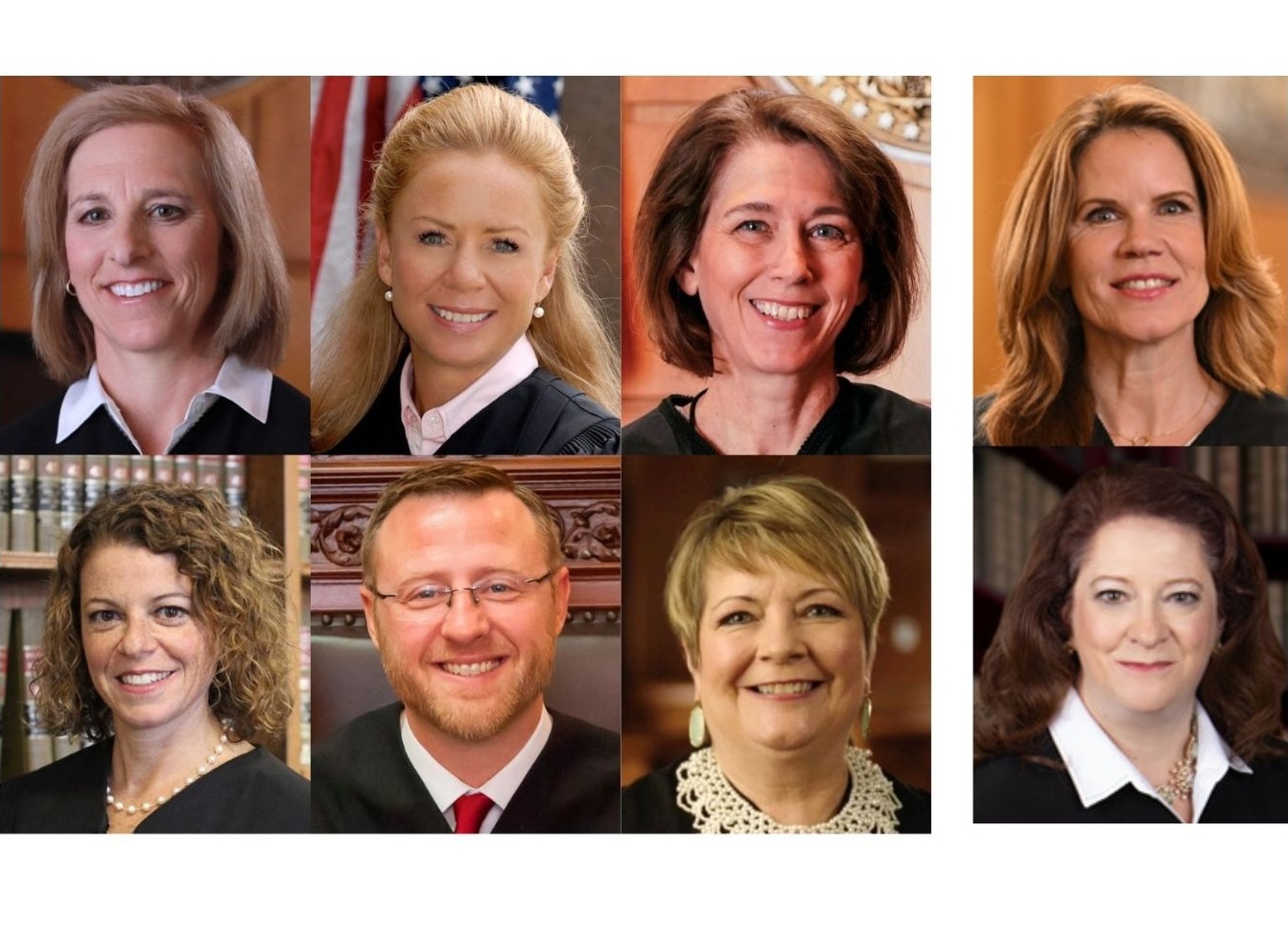
Republicans fear, and Democrats crave, a long-lasting grip on the state’s highest court by the political Left. Prominent voices across the political spectrum think it’s very possible.
By Peter Cameron, THE BADGER PROJECT
It wasn’t that long ago – 2018 to be exact – that the political Right held a commanding 5-2 majority on the Wisconsin Supreme Court.
That control of the state’s highest court allowed Republicans to get favorable rulings on some major disputes, including gerrymandered political districts, curbing labor union laws, and limiting the power of the Democratic governor.
Now the state’s political Right worries about a court that could have a 5-2 left-leaning majority this year, and maybe even 6-1 next year if things don’t start turning around.
In one of the most politically purple states in the country, left-leaning candidates for the court have won their technically nonpartisan elections, held in April, by ten points or more in each of the last three contests.
“Unless conservatives figure out how to motivate low propensity voters in spring elections, we are facing a 7-0 leftist court,” right-wing talk show host Mark Belling wrote online in early March.

The odds appear to be stacked against the Right this year and perhaps next year too. The president’s party often performs poorly in lower-turnout elections, like the November midterms and the off-season, April Supreme Court elections in Wisconsin, at least in part because supporters of the party out of power are usually more motivated to vote. This has been particularly true in the era of Donald Trump, who motivates his supporters to leave the house to vote for him, but often not for other Republicans when he’s not on the ballot.
To make matters worse for the political Right in Wisconsin, deep blue Dane County continues to grow, and vote, in huge numbers. Meanwhile, the previously dark red suburban counties that surround Milwaukee have purpled in the Trump era, moving towards the center.
The motivation gap is reflected in the lopsided fundraising differential between the candidates in the spring campaign. The Left’s candidate, Court of Appeals Judge Chris Taylor, has reported raising nearly ten times what the Right’s candidate, Court of Appeals Judge Maria Lazar has.
Righwing radio host Dan O’Donnell called that disparity a “five-alarm fire” on his program in January.
“It really is starting to feel like this race is already lost,” O’Donnell said.
Some political scientists are sympathetic to that view.
“I’ve seen a lot of ads for Taylor and basically nothing for Lazar,” said UW-Green Bay political science Prof. Aaron Weinschenk. “It almost seems like the Right senses that the race is probably out of reach this time around.”
“It appears that conservatives may be focusing their (cash) on other elections, such as next fall’s elections for governor and state legislature and perhaps one or two congressional contests,” said Joe Heim, a political science professor emeritus at UW-La Crosse.
The tables have turned
It wasn’t that long ago that the political Right in Wisconsin dominated low-turnout elections. When Wisconsin Supreme Court Justice Annette Ziegler ran for reelection in 2017, the Left didn’t even bother running a candidate, such was conservatives’ dominance in off-season contests.
But in recent years, left-leaning candidates for the state Supreme Court have won four of the last five elections, often by large margins.

And Ziegler threw conservatives into a panic when she announced in early March she wouldn’t run for reelection in 2027.
The Left in Wisconsin has been aided by issues like abortion, on which a majority of the public takes their side, and left-leaning candidates for state Supreme Court have used that topic to motivate their voters.
When trying to guess the future, Heim said look to the past.
“Given the results of the past several state Supreme Court contests, despite spending millions on conservative candidates, the liberal leaning candidates have won,” he said.
Ramifications of a long-lasting, left-leaning majority
A Wisconsin Supreme Court locked down by the political Left could tilt the playing field significantly, experts say.
Like the right-dominated court did for Republicans in the 2010s, a left-dominated court might allow Democrats to gerrymander the districts in their favor, though the party would first have to take back both houses of the state Legislature and hold the open governorship.
Who sits on courts, at both the federal and state level, matters a great deal, Weinschenk noted.
“We know from a large body of research that judges and justices have ideologies, which influence their decisions,” he continued. “Having a majority in any political institution is valuable in that it provides the opportunity to shape what issues are considered (whether a case is accepted or not) and what the substantive decision ultimately looks like (who wins and loses).”
The Badger Project is an independent, reader-supported news nonprofit in Wisconsin.
FREE TO READ. EXPENSIVE TO PRODUCE.
Creating our hard-hitting news takes a lot of time and money.
A story like this needs at least 8 hours to research, write and edit.
Please consider financially supporting The Badger Project to help us do more reporting in the future.

Leave a Reply