

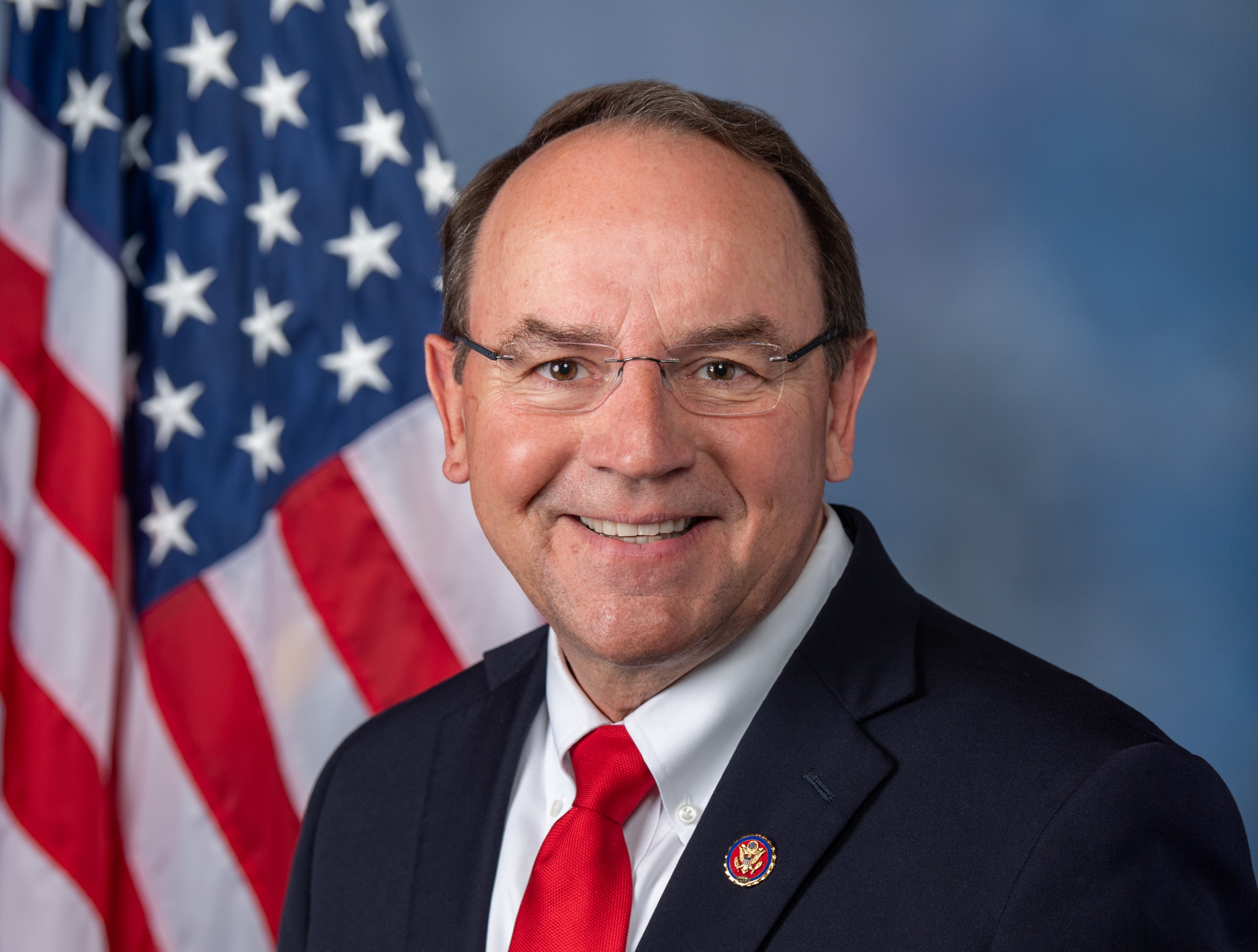
Tom Tiffany supported Donald Trump’s attempt to overturn the 2020 election. As governor, he would play a key part in the state’s 2028 election. “I’ll certify whoever wins the most votes in Wisconsin,” he said.
By Annie Pulley and Peter Cameron, THE BADGER PROJECT
U.S. Rep. Tom Tiffany tried to help overturn the results of the 2020 election for Donald Trump.
Now the Republican is running for governor, a role in which he would be the executive of the entire state of Wisconsin. If elected, experts say he has a duty to perform regarding the state’s votes in the 2028 presidential election.
Though the Wisconsin Elections Commission does most of the heavy lifting to certify presidential elections, the governor does have a “key” role, said Chad Oldfather, a law professor at Marquette University.
“Joe Biden won… In 2028, I’ll certify whoever wins the most votes in Wisconsin.”
Tom Tiffany
After the November election, the bipartisan Wisconsin Elections Commission receives and certifies the statewide election results, said Bryna Godar, a staff attorney for the State Democracy Research Initiative at the University of Wisconsin Law School, in an email to The Badger Project. The commission then creates a certificate naming the electors chosen by the winning political party to vote for president and vice president in the Electoral College, she noted.

The governor has to sign that certificate and send it to the U.S. archivist in Washington, D.C., Oldfather said.
Wisconsin law suggests the governor’s role in signing the certificate is more of a duty than an act of “discretion,” Oldfather said. But “there’s always the possibility that someone can come up with an argument as to why the duty doesn’t cover a specific scenario.”
Godar said courts could step in if the governor refuses to sign the certificate or tries to change it.
Asked to comment for the story, Tiffany’s campaign sent a statement from the candidate.
“Joe Biden won,” it read. “Wisconsin voters have also spoken clearly on election integrity, banning Zuckerbucks (grants from private citizens to help fund elections and named after Mark Zuckerberg) and supporting voter ID. In 2028, I’ll certify whoever wins the most votes in Wisconsin.”
Attempts to overturn the 2020 election
In the aftermath of the 2020 election, the Trump campaign filed lawsuits across the country challenging the election of then-President-Elect Joe Biden. Judges appointed by Republican and Democratic presidents rejected those attempts.
“The November 3rd election was the most secure in American history,” the federal government’s Elections Infrastructure Government Coordinating Council & the Election Infrastructure Sector Coordinating Executive Committees announced in a joint statement after the election.

At a campaign rally in 2016, Trump said he would accept the results of the election “if I win.”
Tiffany also joined a 2020 effort led by Texas to challenge Biden’s narrow but legitimate victories in Arizona, Michigan, Pennsylvania and Wisconsin. He was one of more than a hundred other Republicans in Congress, and the only from Wisconsin, to sign a letter to the court supporting the lawsuit.
The U.S. Supreme Court, featuring three Trump-appointed justices, dismissed the lawsuit in December 2020, writing that Texas lacked legal standing to interfere with how other states conduct elections.
Beyond supporting the lawsuit, Tiffany also voted to object to the certification of 2020 election results in Arizona and Pennsylvania. When asked if he regretted his vote in an August TV interview with WISN-12 News in Milwaukee, Tiffany said Biden won the 2020 election. Pressed further, Tiffany said he was focused on the future and not the past.
In a separate case, the Wisconsin Supreme Court also rejected, albeit by the narrowest of margins, Trump’s effort to challenge the results of the 2020 election in the blue counties of Dane and Milwaukee.
Wisconsin Supreme Court Justice Brian Hagedorn, a conservative, sided with the court’s three left-leaning justices and wrote in his 2020 opinion that the Trump campaign needed to challenge election rules before the election, not after.
The remaining three conservative justices on the state’s highest court dissented, writing that the court should have weighed the merits of the case.
Wisconsin voters head to the polls again in November as Tiffany and Milwaukee County Executive David Crowley, a Democrat, face off for the governor’s mansion.
The Badger Project is an independent, reader-supported news nonprofit in Wisconsin.
FREE TO READ. EXPENSIVE TO PRODUCE.
Creating our hard-hitting news takes a lot of time and money.
A story like this needs at least 8 hours to research, write and edit.
Please consider financially supporting The Badger Project to help us do more reporting in the future.


Leave a Reply