

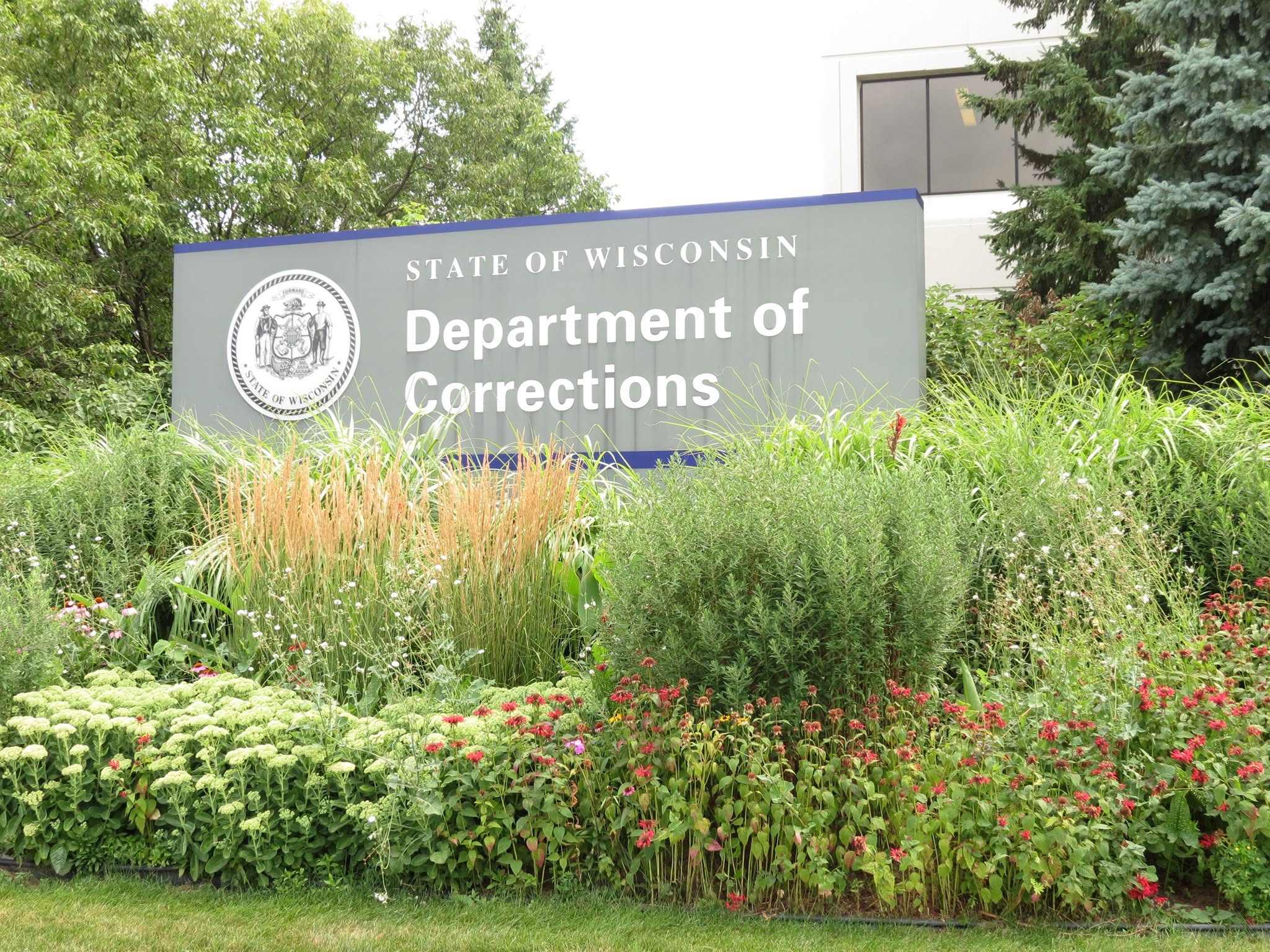
The state’s prison population has been rising for years, and the system is now over capacity by thousands, leading to millions more in expenses annually.
By Annie Pulley, THE BADGER PROJECT
An aggressive jailing practice by the state of Wisconsin is leading to more prisoners booked into an already overcrowded prison system, and costing taxpayers tens of millions every year.
About 20% of adults in state prisons are currently incarcerated essentially for parole violations, not because they were convicted of a new crime, according to a report from Columbia University. On average, these parole violators will spend an additional one and a half years behind bars. Some argue the system is unfair and leading to huge costs, financially and beyond.
Extending prison time for these people, sometimes for questionable reasons, is costing state taxpayers. In 2015, the Wisconsin Department of Corrections sent nearly 3,000 people back to prison without a new conviction, costing the state almost $148 million, according to a 2016 report from Human Impact Partners, a public health advocacy group.
Whether people are sent back to prison for a “crimeless violation” or because they have a new conviction, experts say the practice is unfair and contributes to mass incarceration.
The problem, they argue, stems from the state’s current parole system, called extended supervision.

Prison sentences in Wisconsin are divided into two parts. Inmates first serve a fixed time behind bars before being released to serve the rest of the sentence on extended supervision. Corrections agents try to ensure individuals on supervision comply with an extensive set of rules.
But how that extended supervision time is credited can be very unjust, some experts say. For example, if an individual successfully served three and a half years out of a four-year period of supervision but relapsed and picked up a charge for possessing drugs, he could be revoked — sent back to prison — for six months, said Connor Romenesko, an attorney for the State Public Defenders in Milwaukee. After his release into the community the second time, he would receive credit for the additional six months he spent in prison, but he would lose the credit for the three and a half years he spent in the community while under supervision.
“All of a sudden, a four-year term of extended supervision can turn into a seven-year term of extended supervision just because of a low-level violation,” Romenesko said.
Pushing jail sentences past the maximum
Andrew Drasen, a former inmate, says he understands the issue because he lived it.
“It’s like that time didn’t count,” said Drasen. If they get the “maximum sentence and they lose that street time, it essentially pushes the sentence past the maximum.”

Drasen, 38, is an author and speaker who was released from prison in 2019 after serving a total of about three years for drug convictions. He completed his memoir, which detailed his two-decade struggle with addiction, while still in prison.
“I’ve kind of run the entire gamut of the Wisconsin criminal justice system,” Drasen said, “And I think this is one of the biggest issues.”
Drasen lost five months of street time because of a revocation. Others lose a lot more time.
Of the total number of folks who exit supervision for any reason, about 30% of them leave because they were revoked, according to a 2024 report from the U.S. Department of Justice.
People can be revoked if they face new criminal allegations or for breaking the conditions of their supervision, like missing an appointment, accepting a job without prior approval or borrowing money, according to the ACLU of Wisconsin.
People serving time in the community are required to comply with 18 standard rules of supervision, some of which are “exceptionally broad,” Romenesko said. Their corrections agent also adds to this list of rules.
“The conditions of supervision are often numerous, onerous, confusing, and void of public safety justifications,” the 2019 report from Columbia University reads.
Of those imprisoned in Wisconsin in the past 12 months and then released on community supervision, about 25% were revoked for new criminal behavior. Another 34% were revoked without an active and related criminal conviction or sentence. However, the department says that figure is historically about half as large after it accounts for slower updates from the courts.
More inmates, more costs
Romenesko, who has years of experience in revocation hearings, says that the state’s systems of probation and extended supervision are helping push prisons beyond capacity, leading to higher expenses for the taxpayer, and more expensive prisons for the guards and inmates.
About 23,000 people are imprisoned in Wisconsin, which is about 5,000 more than those facilities were designed to hold, according to an April report from the Wisconsin Policy Forum. Between 2000 and 2019, the number of people imprisoned in Wisconsin grew by about 16%. The state’s overall population grew by about 8% in the same time period.
Wisconsin is also ranked No. 12 in the country for its corrections spending per capita and outpaces the national average. And this expense will probably continue to grow, the policy group wrote. In 2023, the state Legislature approved wage increases for prison employees to counter staffing shortages. The costs of caring for inmates is also rising as they age in prison.
“We’re just adding more people into the prison system, and we’re increasing costs,” said Nancy Gartner, a criminal justice professor at UW-Platteville

Criminal justice systems exist on a pendulum, Gartner said. In the 1990s, the country favored retributive justice, which is a system that prioritizes punishment and deterrence. In the same era, Wisconsin passed a law that changed the structure of prison sentences and created extended supervision. Wisconsin’s current criminal justice system is “revocation-happy,” Gartner said.
Many other states instead prioritize rehabilitative justice.
For instance, Minnesota law says revocation can only be used “as a last resort when rehabilitation has failed.”
The same sentiment hasn’t taken root as strongly in Wisconsin, Gartner said. Conservative policy tends to emphasize harsher forms of punishment, and Wisconsin’s state government has been dominated by Republicans since 2011.
‘Taking away someone’s freedom for the second time’
Even if the district attorney chooses not to prosecute new criminal allegations, the Department of Corrections could still send someone back to prison.
Revocation hearings, the process the department uses to send someone back, also have a much lower standard of proof than criminal court, Romenesko said.
Whereas a prosecutor in a criminal case is required to prove guilt beyond a reasonable doubt, in a revocation hearing, the Department of Corrections only has to prove the allegations are true based on a preponderance of evidence, meaning that 51% of the evidence suggests the defendant is guilty.
Standard courtroom rules don’t apply in these hearings, and hearsay, which is a statement made outside of court that’s not typically considered evidence, can be admissible, Romenesko said. In these hearings, a client’s right to due process is limited.
“I think a lot of people don’t realize that when we are taking away someone’s freedom for the second time, that is not held to the same standard as if they were being tried in a court of law,” said Gartner.
SUPPORT OUR WORK AND HELP US INVESTIGATE THE POWERFUL!
DONATEAlternatives
The Department of Corrections should dramatically decrease the amount of revocations it pursues for technical violations like failing a drug test, missing a curfew or losing a job, she said. The state should be more lenient and implement individualized rather than standardized rules for those on supervision.
If folks are revoked, the state should credit them with the time they already spent on supervision when they are released again, Gartner said.
Agents also need to understand their populations better. Corrections agents should consider how children can make it harder to attend appointments or programming. Requiring a person who hasn’t received a high school diploma to attend college classes would also be inappropriate, Garter said. It’s also true that not all people being supervised work jobs with traditional hours, Gartner said.
She doesn’t anticipate sentencing laws changing anytime soon unless there’s a big push.
“I think public sentiment would need to be really shared with the legislators to make some of those changes,” Gartner said.
But starting in January, Democrats will take full control of state government in Wisconsin. Advocates hope this shift, after 16 years of Republican control, could lead to other changes.
The Badger Project is an independent news nonprofit in Wisconsin.
FREE TO READ. EXPENSIVE TO PRODUCE.
Creating our hard-hitting news takes a lot of time and money.
A story like this needs at least 8 hours to research, write and edit.
Please consider financially supporting The Badger Project to help us do more reporting in the future.
Until the end of the year, all donations* will be MATCHED by NewsMatch.
*Up to $1,000 per person

Leave a Reply