

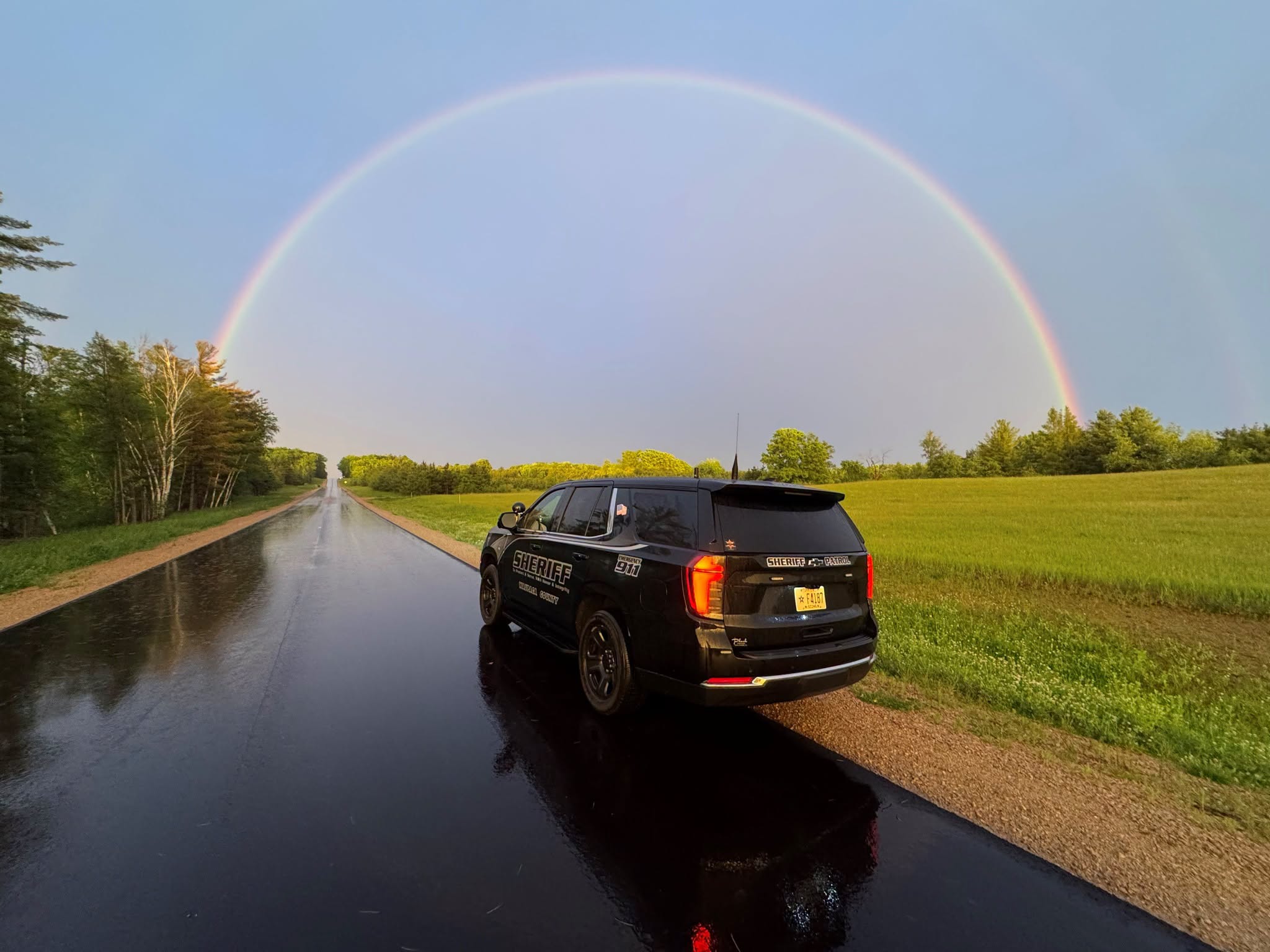
The central Wisconsin sheriff’s office has 50 take-home vehicles, nine of which travel beyond the county, Sheriff Tim Wilz says. The take-home policy is excessive and should be reined in, a contender for sheriff says.
By Wyatt Massey, THE BADGER PROJECT
Spotting Waupaca County Sheriff’s Office vehicles beyond the county line may not be the sign of a regional law enforcement operation. It could just be someone going home.
Allowing employees to drive squad vehicles home is common among law enforcement agencies, Jim Palmer, executive director of the Wisconsin Professional Police Association, told The Badger Project.
In Waupaca County, this benefit extends to employees who live beyond the county’s borders.
The policy, first established in 2017 and obtained by The Badger Project in a records request, states that the sheriff can assign vehicles to employees. And the sheriff can remove the privilege due to misuse or if the officer resides outside of Waupaca County. Employees living outside the county “may be required to secure the vehicle at a designated location or the Office at the discretion of the Sheriff,” the policy reads.
The sheriff’s office has 50 law enforcement vehicles — including patrol squads and unmarked vehicles — available for employees to drive home, nine of which are taken outside of Waupaca County, Sheriff Tim Wilz wrote in an email to The Badger Project.

The practice allows deputies to travel directly to an incident with a fully equipped vehicle, which can decrease response time given Waupaca County covers 765 square miles, Wilz wrote. The central Wisconsin county’s geographic size is roughly in the middle of the state’s 72 counties. Likewise, its population of 51,812 at the 2020 census ranks near the middle.
“There are also benefits to the Sheriff’s Office and the public, including increased visibility, improved response capability, reduced time spent transferring equipment, and better readiness for after-hours or emergency call-ins,” he said.
Under a 2013 state law, local governments cannot require employees to live within a certain area, like the borders of a city or county. However, counties can require law enforcement, fire, or emergency personnel to live within 15 miles of their assigned jurisdiction. In his statement, Wilz said the furthest county employee with a take-home squad is about 15 miles from the county line.
At least one deputy driving their squad to an out-of-county home lives in Stevens Point, about 18 miles from the county line, according to an investigation by The Badger Project.
County-level law enforcement agencies are more likely to grant employees take-home vehicles compared to local municipalities, given the larger geographic area of a county, said Palmer, the Wisconsin Professional Police Association leader. At times, an employee who resides outside a county may be able to respond faster than an employee who lives within the county’s borders but in a more remote area, he said.
At least one deputy driving their squad to an out-of-county home lives in Stevens Point, about 18 miles from the county line, according to an investigation by The Badger Project.
Driving an assigned vehicle home each day will increase its mileage and general wear and tear, but the operational value of having someone in that area prepared to respond may outweigh these costs, Palmer said. Agencies should regularly evaluate whether employee commute times are reasonable, he said.
Wilz said the additional costs of driving a vehicle outside the county are hard to separate from a vehicle’s other uses, including responding to service calls, training, and investigations. Allowing employees to take a squad home is an employee benefit, which can help with recruitment or retention, he said.
“Many law enforcement agencies are able to pay higher wages than Waupaca County, with some deputies at surrounding agencies making approximately $4 to $6 more per hour,” Wilz noted.
Opposition to the policy
The department’s take-home vehicle policy has stirred some objection. Wilz, who is running for re-election, will likely face Justin Malueg, an independent who worked for the sheriff’s office between 2020 and 2024, in the November election. Malueg takes issue with two administrative positions at the sheriff’s office – the jail captain and dispatch captain – having take-home squad vehicles.
Malueg drew attention to county policy in an October 2025 Facebook video about sheriff’s office records he received. In it, he stated the sales price of the two vehicles, a 2020 Ford Expedition and a 2023 GMC Acadia, along with related gas and maintenance costs between January and August 2025, totaled nearly $100,000.
Malueg told The Badger Project that while both employees live within the county, he’d prefer they use older units, such as former patrol vehicles. The current practice represents wasteful spending and the money would be better spent on providing raises to employees or going to addiction services, he said.
Wilz, in his email to The Badger Project, disputed Malueg’s calculation of costs and said the assigned vehicles are necessary for the positions to respond to emergencies. The vehicles’ purchase prices, which Malueg included in his cost estimate, are not recurring expenses, and the vehicles are typically rotated out of the primary patrol fleet and not bought specifically for the administrative positions, Wilz said. The sheriff’s office grants seven administrative positions, which include the sheriff and division captains, take-home vehicles, none of which go to homes outside the county, he said.
The 911 dispatch captain has a take-home vehicle, and this is a civilian position which cannot patrol or make arrests, Malueg noted.
Apart from Malueg’s objections, The Badger Project also received a complaint about the deputy using their squad to travel to their Stevens Point home, in neighboring Portage County, every workday.
A contested race for sheriff
The sheriff’s race is contentious. Last year, Malueg claimed Wilz and Waupaca County’s District Attorney were working together to prevent him from working in law enforcement and that Wilz, a Republican, was blocking his membership in the county GOP, a key step in his pursuit of the sheriff’s position in the politically right-leaning county. Malueg is now running as an independent.
At the time, Wilz responded that Malueg “has been found to be untruthful on multiple occasions.” In 2024, after Malueg resigned from the sheriff’s office, county District Attorney Kat Turner sent a letter to defense attorneys on cases that involved Malueg; the letter questioned the deputy’s truthfulness in previous investigations. Malueg, who denied the allegation, was supported by the county’s previous district attorney, Veronica Isherwood.
“There is simply no evidence that Justin Malueg was dishonest or lied, even by omission, in any investigation found in his personnel file,” Isherwood wrote in an email to a police chief conducting a background check on Malueg.
Both accused Wilz of trying to torpedo Malueg’s political challenge.
The sheriff has also been the subject of accusations of dishonesty. In 2022, during a court hearing about a possible illegal vehicle search, Wilz testified that the sheriff’s office alters police reports “all the time,” and that deputies may not know their report was changed. The judge in the case determined a so-called Brady violation had occurred, prompting Isherwood to send nearly 80 letters to defense attorneys with pending cases in the county.
Wilz ran unopposed in the county’s GOP primary in August. He is expected to face Malueg in the Nov. 3 general election.
The Badger Project is an independent news nonprofit in Wisconsin.
FREE TO READ. EXPENSIVE TO PRODUCE.
Creating our hard-hitting news takes a lot of time and money.
A story like this needs at least 8 hours to research, write and edit.
Please consider financially supporting The Badger Project to help us do more reporting in the future.

Leave a Reply